
Jiangsu Huachen Transformer Co.,Ltd.
- All
- Product Name
- Product Keyword
- Product Model
- Product Summary
- Product Description
- Multi Field Search

Views: 0 Author: Site Editor Publish Time: 2026-08-11 Origin: Site


Facility managers, urban planners, HOA boards, and developers face a recurring challenge: balancing the aesthetic advantages of ground-level electrical infrastructure with strict safety mandates. The transition from overhead power lines to underground distribution places high-voltage equipment directly at ground level. This shift forces site planners to ask: are pad mounted transformers safe for public spaces? Ground-level placement introduces immediate exposure risks, including vehicular impacts, unauthorized access, and environmental hazards like oil leaks. Evaluating whether these units meet acceptable risk thresholds requires a technical breakdown of enclosure standards, electromagnetic field (EMF) data, mandated clearance zones, and advanced equipment designs. Modern engineering controls neutralize these ground-level hazards, allowing safe deployment in densely populated residential and commercial environments. We will examine the physical defenses, clearance rules, and internal mechanisms that keep these systems secure.
Engineered Enclosures: Modern units utilize tamper-resistant, grounded steel enclosures designed to withstand environmental stress and prevent unauthorized access, neutralizing primary electrocution risks.
EMF Dissipation: Electromagnetic fields drop to negligible, harmless levels within 3 to 10 feet of the enclosure, posing no scientifically validated health risks to nearby occupants or residents living next to the equipment.
Clearance is Critical: Safety is heavily dependent on strict adherence to installation clearances—typically requiring 10 feet of unobstructed space for maintenance access, public safety, and fire mitigation.
Advanced Configurations: Integrated solutions, such as the ZGS Combined Box-Type Transformer, offer compartmentalized designs that further isolate high-voltage components, reducing arc flash potential and simplifying safe maintenance.
Assessing the inherent vulnerabilities of placing distribution transformers at ground level requires comparing them to traditional pole-mounted systems. Pole-mounted units rely on physical elevation to keep high-voltage lines out of reach. Ground-level units, including large commercial installations and the green boxes found in residential yards, rely entirely on engineered physical barriers. These barriers must perform flawlessly to protect pedestrians, pets, and property from energized components.
The primary defense mechanism of any ground-level electrical unit is its steel enclosure. Manufacturers construct these cabinets using heavy-gauge, weather-resistant steel. The core design principle relies on dead-front construction. In a dead-front configuration, no live electrical parts are exposed when a technician opens the primary access doors. High-voltage connections utilize insulated loadbreak elbows and shielded cables. Operators can perform visual inspections without facing immediate electrocution hazards.
Comprehensive grounding grids play a mandatory role in exterior safety. During installation, contractors bury a grounding ring—typically made of 4/0 bare copper wire—around the perimeter of the concrete pad. They drive copper-clad ground rods eight feet into the earth and connect them to the ring using exothermic welds. The steel enclosure bonds directly to this grid. This configuration ensures the exterior remains safe to touch under normal operating conditions. If an internal fault energizes the casing, the grounding grid immediately directs the fault current into the earth. This action trips upstream protective devices and neutralizes the shock hazard before anyone walking by can be injured.
Public proximity demands extreme tamper resistance. Children often mistake these green boxes for play structures, and unauthorized individuals may attempt to break in for copper theft. To prevent access, engineers implement rigorous security standards. The cabinets feature multi-point locking mechanisms. The doors will not open unless all internal latches release simultaneously.
Technicians secure these units using specialized penta-head bolts. A standard wrench, pliers, or screwdriver cannot turn a penta-head bolt. Only utility personnel and authorized contractors possess the specific sockets required to bypass these fasteners. Furthermore, the padlock pockets are recessed, preventing someone from cutting the lock with standard bolt cutters. Reinforced, concealed hinges resist prying attempts with crowbars. These combined physical defenses ensure the internal high-voltage components remain completely isolated from the general public.
Comparison of Distribution Transformer Safety Profiles
Feature | Pole-Mounted Systems | Ground-Level Systems |
|---|---|---|
Primary Access Deterrent | Physical height (30+ feet) | Heavy-gauge steel and locks |
Visual Impact | High visibility, overhead clutter | Low profile, blends with landscaping |
Maintenance Access | Requires bucket trucks and fall protection | Ground-level access, requires hot-sticks |
Vulnerability | High winds, falling trees, ice storms | Vehicular impact, flooding, root intrusion |
Ground-level placement introduces specific environmental and behavioral risks. Site planners must address these hazards through physical defenses, internal safety mechanisms, and community awareness programs.
Public proximity creates inherent liability for property owners. Community education serves as a primary line of defense. Utilities and property managers must explicitly warn residents never to sit, climb, or play on the equipment. Even with robust grounding and heavy steel, severe physical damage to the enclosure could theoretically compromise safety.
Mandated warning labels must remain highly visible on all exterior surfaces. These NEMA-compliant decals communicate immediate danger to unqualified individuals. For maintenance personnel, lock-out/tag-out (LOTO) compatibility is non-negotiable. Technicians use LOTO protocols to isolate power sources before beginning work. Visual inspection protocols ensure doors remain locked, hinges remain intact, and warning signs remain legible after severe weather events or landscaping activities.
Internal faults generate massive amounts of energy. An arc flash occurs when electrical current jumps across an air gap, creating intense heat, blinding light, and a concussive pressure wave. To mitigate catastrophic failure risks, a standard Pad Mounted Transformer relies on multiple internal safety mechanisms working in sequence.
Current-limiting fuses act as the primary defense. These fuses interrupt fault currents in milliseconds. They extinguish the arc before internal pressure builds to dangerous levels. Bayonet-style expulsion fuses offer secondary protection, isolating faults based on fluid temperature and current overload. Additionally, mechanical pressure relief valves (PRVs) vent excess internal gases safely to the outside atmosphere. These components work together to isolate faults before they breach the physical steel enclosure, protecting anyone standing nearby.
A transformer struck by a car presents a severe fire and electrocution hazard. This risk is prevalent in residential neighborhoods, commercial parking lots, and industrial loading zones. Moving vehicles can easily dislodge a unit from its pad, severing the underground high-voltage cables and spilling dielectric fluid.
Strategic site placement provides the best mitigation. Planners should position equipment away from high-traffic curves, blind intersections, and direct reversing paths in parking lots. Elevated concrete pads offer baseline protection against low-speed impacts. For high-risk areas, the installation of protective steel bollards is mandatory.
Standard Bollard Installation Steps for Electrical Equipment:
Excavate footing holes at least 36 inches deep to get below the local frost line.
Insert 6-inch diameter schedule 40 steel pipes into the footings.
Ensure the bollards are spaced wide enough to allow the transformer doors to open fully (minimum 10-foot clearance in front).
Fill the steel pipes and the surrounding footing hole with 4000 PSI concrete.
Paint the bollards with high-visibility safety yellow and apply reflective tape.
Transformers utilize dielectric fluids for cooling the internal coils and providing electrical insulation. Traditional units use highly refined mineral oil. While effective, mineral oil is flammable and poses severe soil and groundwater contamination risks if the steel tank rusts or ruptures.
Modern engineering offers less-flammable dielectric fluids, such as natural ester fluids (e.g., FR3). Ester fluids possess significantly higher flash points, making them much harder to ignite during an internal fault. Furthermore, they are biodegradable, reducing environmental remediation costs if a spill occurs.
Environmental protection requires secondary spill prevention measures. In environmentally sensitive or high-density areas, installers utilize specialized concrete containment pads. These pads feature integrated curbs designed to capture the entire fluid volume of the transformer. This containment strategy prevents oil from reaching storm drains or contaminating local groundwater supplies.
Homeowners frequently express anxiety regarding "radiation" in their yards. Misinformation regarding electromagnetic fields (EMF) often complicates site planning and delays residential developments. We must separate verifiable scientific data from common public misconceptions.
All electrical equipment generates low-frequency magnetic fields. We measure these fields in milligauss (mG). At the exterior surface of the steel cabinet, the mG output is measurable but relatively low. The grounded steel enclosure provides some shielding against the electric field, though the magnetic field passes through. Interestingly, the highest EMF readings often come from the high-voltage cables buried directly beneath the unit, rather than the transformer core itself.
Living next to a large ground-level transformer is safe. The equipment emits extremely low-frequency (ELF) non-ionizing fields. Unlike X-rays or gamma rays, non-ionizing fields do not possess enough energy to break chemical bonds or damage human DNA. The presence of a green box near a property line does not introduce harmful radiation into the home. A standard kitchen refrigerator or microwave often exposes a homeowner to higher localized mG levels than a transformer located in the front yard.
Magnetic fields dissipate rapidly over distance. This dissipation follows the inverse square law. If you measure 50 mG directly at the cabinet surface, stepping back just three feet might drop the reading to 5 mG. At ten feet, the field is often indistinguishable from the background EMF generated by standard household wiring. Standard building setbacks completely eliminate prolonged exposure risks for residents inside their homes.
Global health organizations monitor EMF exposure continuously. The Institute of Electrical and Electronics Engineers (IEEE) and the World Health Organization (WHO) maintain clear consensus on low-frequency magnetic fields. Current scientific evidence does not link standard residential EMF exposure to adverse health effects. Relying on these verified studies helps site planners address community concerns effectively during public hearings.
Safety heavily depends on spatial planning. Proper clearances ensure adequate cooling, prevent fire spread to nearby structures, and allow utility workers to perform emergency maintenance safely.
Standard Clearance Guidelines for Ground-Level Electrical Equipment
Clearance Zone | Minimum Distance | Primary Purpose |
|---|---|---|
Front (Access Doors) | 10 Feet | Hot-stick maintenance access and operational safety. |
Sides and Rear | 3 to 5 Feet | Airflow for cooling and visual inspection access. |
Combustible Walls | 10 Feet | Fire mitigation and structural protection. |
Doors/Windows/Vents | 20 Feet | Preventing smoke ingress during a catastrophic failure. |
The National Electrical Code (NEC) Article 450 and local utility mandates dictate strict structural clearances. You must position equipment away from building overhangs, combustible walls, doors, and fire escapes. Placing a unit too close to a building risks igniting the structure if an internal fire occurs. It also risks drawing toxic smoke into the building's HVAC intake vents.
The standard "10-foot rule" applies to the front working clearance. The front doors require 10 feet of completely unobstructed space. This clearance serves dual purposes. First, it allows utility workers to use long fiberglass hot-sticks to operate internal loadbreak elbows safely. Second, it establishes a safe perimeter, keeping the general public away from the immediate blast zone if an arc flash happens during live maintenance.
Homeowners often attempt to hide utility boxes with aggressive landscaping. Planting shrubs or trees too close introduces severe risks. Root intrusion can destroy the underground grounding grids, eliminating the primary shock protection. Overgrown vegetation obstructs maintenance access, preventing doors from opening fully. Dead leaves and pine needles accumulating around the base create a combustible fuel source right next to high-voltage equipment.
Safe digging practices are mandatory. Landscapers and property owners must comply with local 811 regulations before planting anything near the pad. Striking a high-voltage underground feed with a shovel or backhoe causes immediate, lethal arc flashes. Contractors must use non-destructive digging methods, like vacuum excavation or hand potholing, to verify underground infrastructure locations. This prevents fatal accidents and widespread neighborhood power outages.
As power demands increase, standard configurations sometimes fall short in high-density or industrial applications. Combined substations represent an evolution in ground-level electrical infrastructure, offering superior isolation, security, and operational flexibility.
Pre-fabricated substations consolidate multiple distribution components into one secure footprint. Instead of wiring separate load break switches, transformers, and low-voltage distribution panels across a large site, engineers deploy a single unified system. This consolidation reduces exposed cabling, minimizes potential failure points, and shrinks the overall installation footprint.
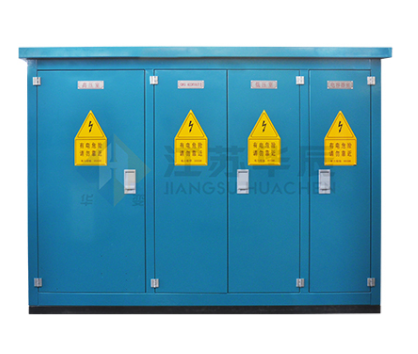
The ZGS Combined Box-Type Transformer exemplifies this advanced approach. It features a highly compartmentalized design. The internal layout physically separates the transformer core, the high-voltage load switch, and the low-voltage distribution panel into distinct, grounded steel chambers.
Key Safety Advantages of Compartmentalization:
Fault Isolation: If a fault occurs in the high-voltage section, the steel bulkheads prevent the arc flash from spreading to the low-voltage controls.
Safe Operation: Technicians can operate low-voltage breakers without exposing themselves to the high-voltage primary side.
Environmental Protection: The unified base often includes built-in fluid containment, eliminating the need for complex secondary concrete pours.
This configuration delivers an exceptional footprint-to-power ratio. Site planners prefer this architecture for industrial parks, wind and solar farms, and high-density commercial developments. These environments demand elevated safety profiles and robust environmental defenses. The compartmentalized nature allows for rapid deployment while maintaining strict compliance with public safety mandates.
Procuring safe electrical infrastructure requires strict attention to manufacturing standards and long-term maintenance protocols. Buyers must evaluate equipment based on verifiable compliance rather than initial acquisition costs.
Ensure all shortlisted equipment meets rigorous industry standards. Enclosures must comply with ANSI/IEEE C57.12.28, which dictates structural integrity, coating durability, and tamper resistance. The internal components should meet C57.12.34 standards for ground-level distribution equipment. Request certified test reports from the manufacturer to verify these compliance metrics before issuing a purchase order.
Safety degrades without proper upkeep. Establish a baseline for routine maintenance immediately after installation. Schedule annual infrared thermography inspections to detect loose connections before they cause arc flashes. Implement regular oil sampling (Dissolved Gas Analysis) to monitor dielectric fluid health and detect internal winding degradation. Conduct quarterly visual audits of locks, physical cabinet damage, and warning sign legibility.
Standard Preventative Maintenance Schedule
Task | Frequency | Safety Objective |
|---|---|---|
Visual Exterior Inspection | Quarterly | Verify locks, hinges, and warning labels are intact. |
Infrared Thermography | Annually | Identify hot spots and loose high-voltage connections. |
Vegetation Clearance | Bi-Annually | Ensure 10-foot front access and 3-foot side airflow. |
Fluid Sampling (DGA) | Every 3-5 Years | Detect internal arcing or paper insulation breakdown. |
Pad-mounted transformers are objectively safe when procured to modern engineering standards, protected from vehicular impact, and installed with strict adherence to clearance and grounding protocols. Physical barriers, internal fuses, and comprehensive grounding grids work together to neutralize ground-level high-voltage hazards.
Buyers should prioritize manufacturers that provide verifiable compliance with IEEE enclosure standards. Select vendors offering less-flammable fluid options and utilizing dead-front, compartmentalized designs to maximize site safety.
To ensure safe implementation, take the following next steps:
Conduct a site-specific spatial audit to verify you can meet the mandatory 10-foot front clearance and side ventilation requirements.
Consult with a specialized electrical infrastructure vendor to specify the correct transformer class, fluid type, and enclosure rating for your specific environment.
Draft a strict vegetation management policy for the property to prevent root intrusion and maintain unobstructed maintenance access.
Install concrete-filled steel bollards immediately if the equipment sits near parking lots, driveways, or loading zones.
A: A general safety guideline is to maintain a distance of at least 10 feet from the front doors and 3 to 5 feet from the sides. This distance ensures you remain clear of the maintenance access zone and provides a safe buffer in the rare event of an internal fault or arc flash.
A: No. They emit extremely low-frequency (ELF) magnetic fields, which are non-ionizing. Scientific consensus from the WHO and IEEE confirms these low-level fields do not damage cells or DNA. The fields dissipate to harmless background levels within a few feet of the cabinet.
A: Under normal operating conditions, the heavy-gauge steel exterior is thoroughly grounded and safe to touch. However, you should never sit on, climb, or allow children to play on the equipment. Physical damage or vandalism could compromise the internal safety mechanisms.
A: Vehicular impact can dislodge the unit, sever underground high-voltage cables, and cause catastrophic oil leaks or fires. To prevent this, units located near traffic zones must be protected by concrete-filled steel bollards and elevated concrete pads.
A: The humming sound is a normal physical phenomenon called magnetostriction. As alternating current flows through the internal coils, the magnetic field causes the steel core laminations to expand and contract slightly, creating a low-frequency vibration. It is not a sign of danger.
A: You must leave at least 10 feet of clear space in front of the access doors for utility workers. Keep shrubs and structures at least 3 to 5 feet away from the sides and back to ensure proper airflow for cooling and to prevent root damage.
A: While extremely rare, catastrophic failure can occur due to severe lightning strikes, vehicular impact, or internal short circuits. Modern units mitigate this risk using current-limiting fuses, pressure relief valves, and heavy steel enclosures designed to contain internal faults.


